Gematria on the Parshah: The Miracle of Yitzchak
 ·
In Parshat Vayeira, Yitzchak Avinu is born to Avraham and Sarah in their old age. Why did they have to wait so long to have a child? What merit brought about this miraculous birth, and what can it teach us about meriting miracles?
The Lubavitcher Rebbe explains that Yitzchak was a miracle child because the history of his descendants, Am Yisrael, would itself be miraculous. The survival of the Jewish people and their extraordinary impact on the world testify to this. But what enabled Avraham and Sarah to bring this miraculous child, and ultimately this miraculous nation, into the world?
Going Beyond Nature
Rebbe Avraham HaMalach explains that Avraham and Sarah merited Yitzchak because they served Hashem by going beyond their own nature and limitations. When a person remains confined by their natural tendencies and ego, they are limited by their mazal (destiny). But when someone goes beyond themselves for Hashem and others, they become a vessel for the infinite, opening themselves to blessings beyond the natural order.
This idea is reflected in Avraham's journey to Canaan. The name כנען (Canaan) shares the same root as the Hebrew word כנע, meaning humility and lowering oneself.
Throughout their tests, Avraham and Sarah did not complain. They maintained complete trust in Hashem and believed in the blessings He had promised them, even when circumstances seemed to make those blessings impossible. Avraham and Sarah repeatedly demonstrated their willingness to go beyond their ego and nature for Hashem.
Gematria reveals this connection. Avraham was 100 years old and Sarah was 90 when Yitzchak was born. Their ages together equal the gematria of כנען (Canaan), 190. This alludes to the humility and selflessness that made them vessels to receive this miraculous blessing.
Another gematria deepens the connection: הארץ אשר אראך (the land that I will show you) equals יצחק בן אברהם ושרה (Yitzchak son of Avraham and Sarah), the gematria of 1019. Rebbe Avraham HaMalach explains that the land Hashem would show Avraham represents an ongoing journey. Avraham and Sarah continually reached higher levels of humility and dedication to Hashem and others. Through this journey of spiritual growth, they prepared themselves to bring a child into the world whose very birth would transcend nature.
Going Beyond Yourself for Others
Two actions in the parshah reveal how Avraham and Sarah went beyond themselves for others: Avraham's hospitality toward his guests and Sarah's prayer for Avimelech and his people.
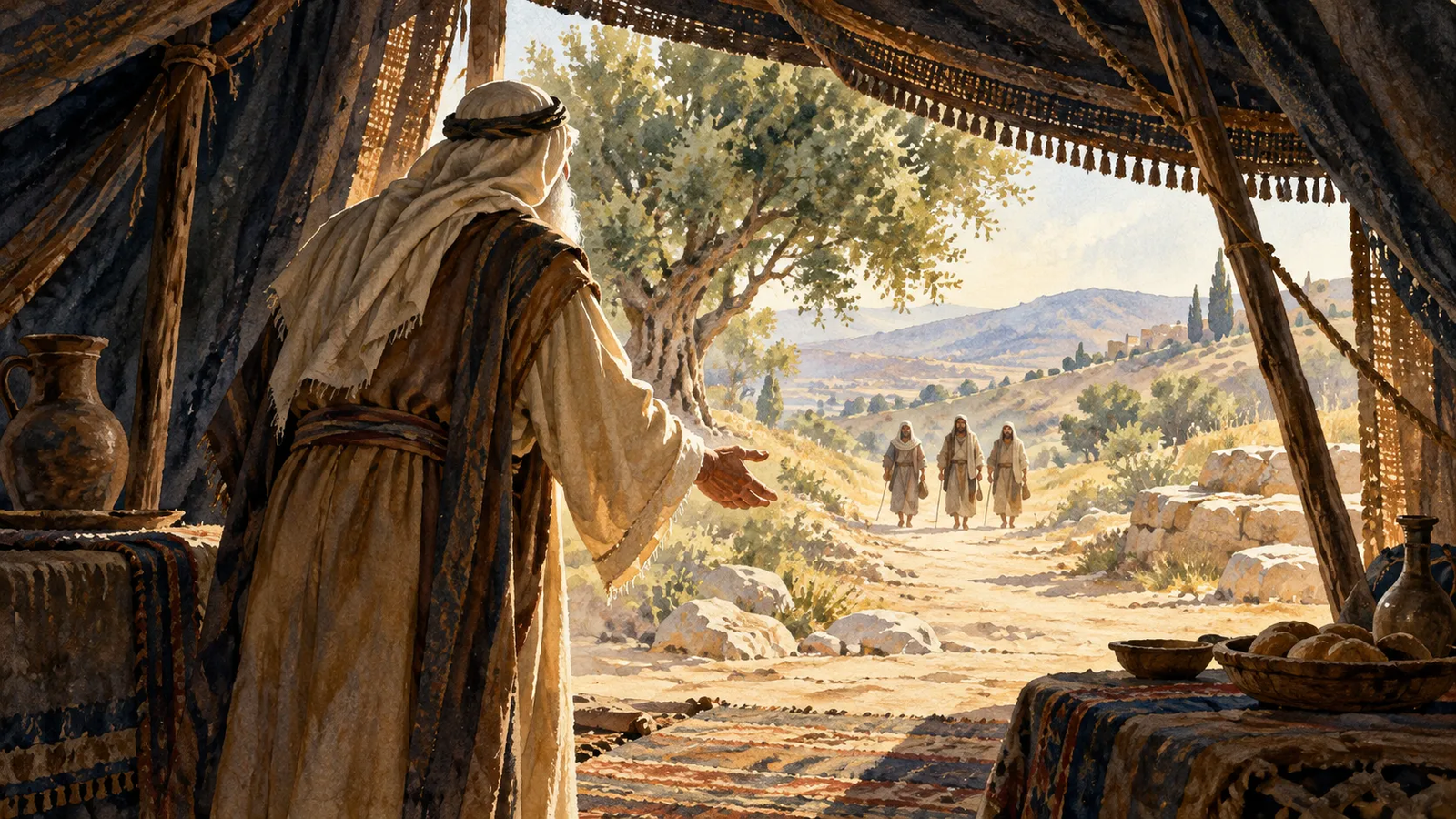
Avraham welcomes three angels whom he believes to be ordinary people. Rashi explains that this was the third day after his brit milah, when the pain is the greatest. Nevertheless, Avraham runs to greet his guests and care for their needs. Even in his own pain, he puts others first. In return, one of the angels announces that Sarah will have a son.
The announcement of Yitzchak's birth is also juxtaposed to the episode of Avimelech taking Sarah. Rashi explains that Hashem punished Avimelech and his household by preventing them from having children. Sarah then prayed for them, and afterward she was blessed with Yitzchak. Despite what had happened to her, Sarah prayed for those who had wronged her. She put aside her own pain to ask Hashem to help others, and afterward received the very blessing she herself needed.
Despite what had happened to her, Sarah prayed for those who had wronged her.
Chazal teach that when someone prays for another person who needs the same blessing, they are answered first. The gematria of בית אבימלך (the house of Avimelech) equals תפלה (prayer), both with a gematria of 515, alluding to the power of Sarah's prayer and the blessing that followed.
Story: Rav Adda bar Ahavah
Taanis 20b relates that Rav Huna had many barrels of wine in a dilapidated building that he feared would collapse. He needed to remove the wine but was afraid to enter. Knowing that Rav Adda bar Ahavah was renowned for his miraculous protection, Rav Huna brought him into the building and engaged him in a deep discussion of halachah while the wine was removed. As soon as they left, the building collapsed.
The Gemara also teaches that Rav Adda merited long life because he never became angry in his household. By overcoming his natural reactions and maintaining his composure even in difficult moments, Rav Adda merited blessings that transcended the ordinary limits of nature.
The Lesson for Us
Avraham and Sarah teach us that going beyond ourselves can open the door to blessings beyond nature. When we put aside our ego and help others even when it is difficult, we follow in their footsteps and can merit blessings we could never have imagined.
For more, check out the Gematria Torah channel on YouTube!