
Spread Light 358 Print edition
Issue #45 October 24, 2026 · י״ג חשון תשפ״ז פרשת לך לך
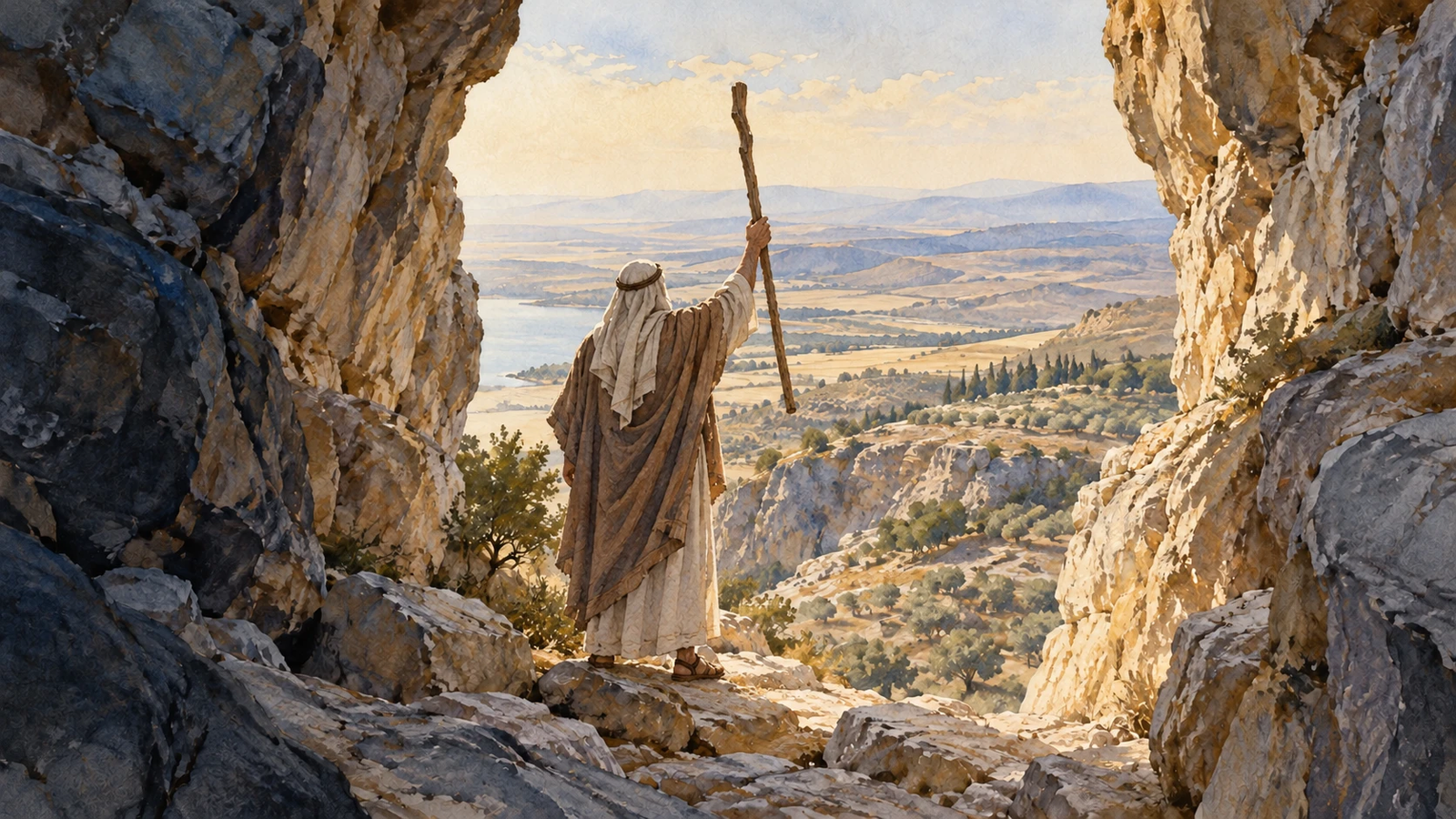
Cover artwork for Parshas Lech Lecha

From the archive

Parshas Lech Lecha

October 24, 2026 · י״ג חשון תשפ״ז · issue #45. Every piece below is printed exactly as it appears on paper — nothing trimmed.

Gematria on the Parshah: Why Is Noach Not the Father of the Jewish People?

In Parshat Lech Lecha, we are introduced to Avraham Avinu, the father of the Jewish people. Rashi and other commentators compare Noach's righteousness to that of Avraham. Many explain that Noach would not have stood out as a tzaddik in Avraham's generation. What was Avraham's greatness compared to Noach? Why did Noach not merit to become the first father of the Jewish people?

The Difference Between Avraham and Noach

Gematria reveals a fascinating difference between these two tzaddikim. נח (Noach) is 58, while אברהם (Avraham) is 248. The difference between them is 190, the gematria of כנען (Canaan).

The name Canaan appears in the stories of both Noach and Avraham. After the Flood, Noach plants a vineyard, becomes intoxicated, and is left uncovered in his tent. His grandson Canaan sees his grandfather's disgrace and mocks him. When Noach learns what happened, he curses Canaan to become a slave of slaves to his brothers.

This highlights a fundamental difference between Noach and Avraham: their perspective towards the wicked.

Hashem commanded Noach to build the Ark over 120 years, giving people the opportunity to ask what he was doing and allowing him to encourage them to repent. Yet, he did not bring a single person to repentance.

Where Noach struggled, Avraham Avinu succeeded. Avraham was sent specifically to Eretz Canaan, where he called out in the name of Hashem and brought people closer to their Creator. Even in a place of spiritual darkness, Avraham revealed the light of Hashem.

The Lubavitcher Rebbe explains that עולם (world) is related to העלם (concealment). The purpose of creation is to break through this concealment and reveal Hashem's presence throughout the world.

The gematria of כנען (Canaan) is 190, the same as נעלם (concealed). Noach saw the darkness of Canaan, while Avraham recognized what lay hidden beneath its surface. He understood that a spark of Hashem's holy light was hidden even in the darkest places.

Avraham Praying for Sodom

In next week's parshah, we see this quality of Avraham reach an even greater level. When Hashem reveals His plan to destroy the wicked city of Sodom, Avraham pleads with Him to spare it.

How was Avraham able to see potential in the wicked? He understood that every person possesses a spark of Hashem's light, even when it is deeply concealed. Those who seemed far from Hashem could still change and discover their true purpose.

The gematria of אברהם וסדם (Avraham and Sodom) is 358, the same as משיח (Mashiach).

Rebbe Pinchas of Koretz teaches that the greatness of Mashiach is that he will see the good in others more than any leader who came before him. Avraham Avinu possessed this same quality, believing in people's ability to change and return to Hashem.

Avraham did not give up on people because of who they were. He believed in who they could become.

Story: Let the Sins Disappear

A story about Berurya, the wife of Rabbi Meir, captures this same idea. Berachot 10a relates that wicked people in Rabbi Meir's neighborhood caused him great anguish and harmed the community. Seeing no hope for them, Rabbi Meir prayed for Hashem to take their lives.

His wife, Berurya, challenged him with a verse in Tehillim: "Let sins be removed from the land" (104:35). She pointed out that the verse calls for sins to be removed, not sinners. She then asked him, "Have you ever tried praying for them to repent?" Rabbi Meir accepted her words and prayed for them. His prayers were answered, and they changed their ways.

Like Avraham Avinu, Berurya looked beyond their wickedness and recognized the spark of Hashem within them.

Avraham did not give up on people because of who they were. He believed in who they could become.

The Message for Us

Avraham Avinu teaches us never to give up on another Jew.

Avraham, who devoted his life to bringing others closer to Hashem, became the father of the Jewish people. His legacy teaches us to look beyond the darkness, recognize the hidden potential in others, and help bring that potential to light.

For more, check out the Gematria Torah channel on YouTube!

Beating the Odds

One might think that you are against all odds, but when you have Hashem on your side the opposite is true, as is indicated by the hei added to the name of Avram-Avraham, and from Sarai-Sarah the yud-hei. Similarly, the episode with the four kings beating the five kings represents this. The Malbim and Torah Temimah both say that this infusion of Hashem resembles a control and kingship over your guf, which in turn will then give tzchok (like Yitzchak), peinu v'reena, marital bliss of happiness and laughter in your mouth.

The Torah Temimah says that achav is an acronym for av hagoyim (associated with Avraham), like achvah in shalom vereyut, which has serenity and peace of mind. This harmonious mindset gives a sense of security, confidence and comfort for the individual that they can conquer and beat the odds.

There Is Gold in Your Egypt!

This week's Parsha follows a definite arc, until there is an unsettling and sudden about-face.

Let me explain. In Abraham's time, Israel and Egypt were polar opposites. Israel was G-d's chosen land. Egypt, on the other hand, was the epicenter of paganism and debauchery. Based on a single instruction from G-d, Abraham left his father's house, traveled through hundreds of miles of dust and finally reached the land G-d had promised him. This entire narrative is a positive forward journey of elevation and progression (both physically and spiritually). So far, so good.

Then Abraham arrived in Israel only to find a severe famine. The fields were cracked and the food had run out. Abraham and his family could not stay. Within days, they were forced to travel again. This time not in an upward trajectory. Now there was a descent, to the lowest, most spiritually depraved place on earth: Egypt.

Suddenly, the man who once smashed his father's idols now had to ask idol worshipers for bread. It got worse. Pharaoh took Sarah into his palace, and G-d struck Pharaoh's house with plagues until she was returned. What a stunning retreat. After climbing so high, to descend so low.

However, the story didn't end there. When Abraham came up out of Egypt, the Torah describes him as "very heavy" with silver and gold. He went down hungry and came back full and loaded with wealth.

This pattern is called yeridah l'tzorech aliyah, a fall that happens for the sake of the rise. Even the darkest places hold sparks of holiness, waiting for the right soul to come and lift them out. Egypt held sparks that only Abraham could lift.

Both of Abraham's trips carried him forward. One overtly and the other in disguise. The name of the Parsha is Lech Lecho, which literally means "go to yourself." Every mile of that road, Egypt included, walked Abraham closer to the person G-d created him to be.

There is gold waiting in your Egypt too. Go bring it home.

Are you experiencing a famine? Maybe you heard G-d's call and were even prepared to say "Yes!" You were all set to sign that lease or start that healing journey, and then, all of a sudden, the ground went dry. And you were forced to be in a place you never wanted to be. Be gentle with yourself there. Then look around, because that low place may be holding a spark that only you can elevate.

No matter what famine you find yourself in, stand up and take one step toward finding it. Abraham walked out of Egypt with his arms full of gold. There is gold waiting in your Egypt too. Go bring it home.

The Journey Back to Yourself

Have you ever looked at your life and realized that you've become everything you were supposed to become, but somewhere along the way, you lost touch with yourself?

You built a life. You took on responsibilities. You became a husband, a father, a provider. You learned how to keep going even when things were difficult, how to show up for everyone who depended on you, and how to carry pressures that nobody else could see. And yet, beneath everything you've built, there may be a quiet feeling that's difficult to explain. You're doing everything you're supposed to be doing, but something inside you feels disconnected.

Maybe you've become so good at being who everyone needs you to be that you've forgotten what it feels like to simply be yourself.

And perhaps the most painful part is that you don't even know exactly what you've lost. You just know that somewhere between trying to succeed, trying to be accepted, trying to keep everyone happy, and trying not to get hurt, something inside you became quieter.

This week's parsha, Lech Lecha, begins with one of the most powerful instructions Hashem ever gives a human being.

"Lech lecha me'artzecha, umimoladetecha, umibeis avicha."

Go from your land, from your birthplace, and from your father's house, to the land that I will show you.

On the surface, Hashem is asking Avraham to leave everything familiar behind and begin a journey into the unknown. But Chassidus offers a much deeper understanding of the words Lech Lecha. They can also be understood as "Go to yourself." In other words, the journey isn't only about leaving a physical place. It's about discovering who you really are.

We spend much of our lives becoming the people we believe we need to be. From childhood, we begin learning what earns us love, what gets us approval, what makes us feel safe, and what parts of ourselves are better kept hidden. Some of us learn to be the responsible one. Others become the achiever, the peacemaker, the strong one, or the person who never needs anything from anybody.

Over time, these ways of being become so familiar that we begin confusing them with our identity.

We don't even realize how much of our personality may have been shaped by the need to belong, to be accepted, or to protect ourselves from getting hurt.

And then Hashem tells Avraham to leave three things: his land, his birthplace, and his father's house.

Perhaps these three represent something we all eventually have to confront. The environment that shaped us, the patterns we were born into, and the beliefs we inherited about ourselves and the world.

Not because our past is bad or because we need to reject where we came from. Our upbringing, our families, and our experiences are all part of our story. But there is a difference between honoring where you came from and allowing it to determine who you are allowed to become.

The journey of Lech Lecha isn't about abandoning our past. It's about no longer allowing our past to be the limit of our future.

A man can spend his entire life trying to prove that he's successful because somewhere inside he still feels like the little boy who wasn't good enough. He can become controlling in his marriage because uncertainty once felt unsafe. He can struggle to express love because he grew up believing that vulnerability was weakness.

And the painful part is that he may genuinely believe this is simply who he is.

But what if it isn't?

What if these are ways you learned to survive rather than expressions of who you truly are?

This is where Lech Lecha becomes such a personal invitation.

Hashem isn't only asking Avraham to leave something behind. He's inviting him to discover something that could never be fully revealed while he remained confined to what was familiar.

And perhaps the same is true for us.

There comes a point in our lives when the very patterns that once protected us begin preventing us from experiencing the relationships and connection we deeply desire. The independence that helped us survive becomes an inability to receive love. The need to achieve becomes an inability to rest. The desire to keep everyone happy becomes a complete disconnection from our own needs and feelings.

At some point, growth requires us to ask whether the person we've learned to be is actually the person Hashem created us to be.

But there is another fascinating detail in Hashem's instruction to Avraham. He doesn't tell him exactly where he's going. He simply says, "El ha'aretz asher areka," to the land that I will show you.

Avraham is being asked to move before he has complete clarity.

And maybe that's because real transformation rarely begins with certainty.

We want to know exactly who we'll become before we're willing to let go of who we've been. We want guarantees that if we become more vulnerable, we won't get hurt. That if we stop controlling, everything will work out. That if we stop hiding behind our achievements, we'll still be worthy of love.

But the journey back to ourselves requires a different kind of trust.

Not the certainty that everything will go according to plan, but the willingness to believe that there is something deeper within us worth discovering.

And perhaps this is the most beautiful part of Lech Lecha. Hashem doesn't say to Avraham, "Go become somebody else."

He says, "Go to yourself."

Because beneath the conditioning, the fear, the expectations, and the identities we've built to navigate this world, there is a neshama that was never defined by any of those things.

A part of us that doesn't need to prove its worth. A part that is capable of loving without controlling, giving without needing approval, and connecting with Hashem without constantly questioning whether we're good enough.

The journey of Lech Lecha isn't about abandoning our past. It's about no longer allowing our past to be the limit of our future.

And maybe that's the invitation for us this Shabbos.

To look honestly at the person we've become and ask ourselves which parts are truly ours and which parts we developed simply to feel safe, accepted, or loved.

Because sometimes the greatest journey a person can take isn't to a new place, a new career, or even a new chapter of life.

It's the journey from the person you learned you had to be, back to the person Hashem created you to be.

Seeing the Light

Avraham is introduced initially at the end of Parshas Noach, but his mission starts here with:

לֶךְ־לְךָ מֵאַרְצְךָ וּמִמּוֹלַדְתְּךָ וּמִבֵּית אָבִיךָ אֶל־הָאָרֶץ אֲשֶׁר אַרְאֶךָ

"Go for yourself, from your land, and from your birthplace, and from the house of your father, to the land which I will show you." (Bereishis 12:1)

What is Avraham's mission that is alluded to at the beginning of his story here?

The land of Israel is revealed to be this place, but once Avraham gets there, there's much more for him to do. This pasuk, then, is alluding to something more.

First, let's look at a Midrash talking about the primeval forces of creation in the first sentences of the Torah. Bereishis Rabbah (2:3) says: תֹהוּ is Adam HaRishon; בֹהוּ is Kayin; חֹשֶׁךְ is the generation of Enosh; עַל פְּנֵי תְהוֹם is the generation of the Flood. וַיֹּאמֶר אֱלֹקים יְהִי אוֹר: this is Avraham.

The Midrash says that Avraham was יְהִי אוֹר. This shows us that as in creation, light was the beginning of good, so too Avraham was the turnaround from the chaos and desolation of early man. He is the עברי, the one who crosses over darkness and doubt into the enlightenment of faith (R. Nachman).

No one, however, starts out that way. To realize one's potential, there are tests. Avraham's test is to realize that אור.

This is alluded to in our pasuk: "Go to the land אֲשֶׁר אַרְאֶךָ." Hashem is telling Avraham he will achieve the land of אֲשֶׁר אַרְאֶךָ. This ראייה (seeing) is the ultimate goal. So too every Jew must go up to the mountain of Hashem for ראייה.

The root of ראייה is reish aleph, ר א. This root is found in many of the Torah's most exalted concepts: ראייה (re'iyah), seeing; יראה (yirah), fear; and אור (or), light. And from that word, we get the teaching הוריה and Torah תורה and its vessel, the ארון (ark).

Avraham's mission is G-d consciousness, seeing Him in everything.

Avraham's origins are from אוּר כַּשְׂדִּים, a darker light altogether. But at the end of all is the place which Avraham reaches at the Akeidah:

כִּי עַתָּה יָדַעְתִּי כִּי־יְרֵא אֱלֹקים אַתָּה וְלֹא חָשַׂכְתָּ אֶת־בִּנְךָ אֶת־יְחִידְךָ מִמֶּנִּי

"For now I know that you are one who fears G-d, since you have not withheld your son, your only son, from Me." (Bereishis 22:12)

What is this fear? ירא.

רֵאשִׁית חָכְמָה יִרְאַת ה׳ שֵׂכֶל טוֹב לְכָל־עֹשֵׂיהֶם תְּהִלָּתוֹ עֹמֶדֶת לָעַד

"The beginning of wisdom is fear of Hashem." (Tehillim 111:10)

This root has awesome concepts. That is יראה (yirah), and even awe. ראייה (re'iyah) is the ability to see divinity in everything. אור is the light which existed before creation.

Regarding this light, on the first day G-d brought it out to show us what is possible, and then He hid it again so the wicked should not use it. However, the righteous still do have access to it: אוֹר זָרֻעַ לַצַּדִּיק (Tehillim 97:11).

The place to which Avraham goes is מוריה, Moriah. There, in the Temple, was the ארון (ark). That is where Torah teaching comes from. This place is the land which I will show you, אַרְאֶךָ, in this pasuk: the land of Israel.

Avraham's mission is G-d consciousness, seeing Him in everything. He founds the family of Israel, who ultimately bring the light of Torah and fear of G-d to the world.

I Know I Love You. But Do You? וידע ישמעאל

When the love we give isn't the love they receive.

I sometimes wonder how it is possible to love someone deeply, to worry about them, sacrifice for them, and genuinely want the best for them, yet somehow leave them feeling unloved.

And when someone tells us they don't feel loved, why is our first instinct to explain everything we've done for them rather than understand what they're missing?

There is something in Parashat Lech Lecha that speaks to this.

When Hashem promises Avraham that Sarah will give birth to Yitzchak, Avraham responds:

לו ישמעאל יחיה לפניך

"If only Yishmael might live before You." (Bereishit 17:18)

Rashi explains, יחיה ביראתך. Avraham is praying that Yishmael should live with Yirat Shamayim.

Hashem answers:

ולישמעאל שמעתיך

"Regarding Yishmael, I have heard you." (17:20)

Yet in Parashat Vayera, Avraham must send Yishmael away.

וירע הדבר מאד בעיני אברהם על אודות בנו

"The matter was terribly painful to Avraham because of his son." (21:11)

Hashem instructs Avraham to listen to Sarah. The separation is necessary, but that doesn't make it any less painful.

We know Avraham loved Yishmael. We know he prayed for him and that sending him away caused him tremendous anguish.

But did Yishmael know?

From his perspective, he had been sent away from his father's home. Whatever the reasons, Yishmael was the one who had to leave.

Pirkei DeRabbi Eliezer (Chapter 30) relates that years later, Avraham travelled to visit Yishmael, having promised Sarah that he would not dismount from his camel.

Yishmael wasn't home. His wife refused Avraham's request for food and water, so Avraham left a message advising Yishmael to replace the threshold of his home.

Three years later, Avraham returned. This time, Yishmael's wife welcomed him. Avraham davened for his son, and his home was filled with blessing.

When Yishmael heard what had happened, the Midrash concludes:

וידע ישמעאל שעד עכשיו רחמי אביו עליו

Yishmael knew that his father's compassion was still upon him.

I find those words extraordinary.

The Midrash doesn't simply tell us that Avraham loved Yishmael. We already knew that.

It tells us that Yishmael knew.

And perhaps there is something deeper in the choice of words.

The Midrash speaks of Rachamim, not merely Ahavah.

Perhaps Ahavah describes the love I feel for someone, while Rachamim asks me to consider what that person is experiencing.

The Gemara in Ketubot (67b), discussing Tzedakah, explains:

די מחסורו אשר יחסר לו

We provide according to what the recipient is lacking, even when those needs seem excessive to us. The Gemara describes providing a horse and servant for someone accustomed to them.

The Torah doesn't measure another person's needs by what I think should be enough. It asks me to consider what they are missing.

Perhaps the same is true of love.

I can sacrifice for someone and give them everything I believe they need, yet leave them feeling empty because I never understood what they were actually missing.

And sometimes, perhaps they have already tried to tell me.

He couldn't walk the road back for his son. But he could leave a light for him to follow.

There is another detail that moves me.

Avraham prayed, and Hashem answered, ולישמעאל שמעתיך.

Hashem heard Avraham.

Yet years later, the Midrash tells us וידע ישמעאל.

Yishmael knew.

Avraham's prayer had been heard in Shamayim, but Yishmael still needed to discover that his father's compassion had never disappeared.

When Avraham passes away, the Torah tells us:

ויקברו אותו יצחק וישמעאל בניו

"Yitzchak and Yishmael, his sons, buried him." (Bereishit 25:9)

Rashi explains, מכאן שעשה ישמעאל תשובה והוליך את יצחק לפניו. Yishmael did Teshuvah and allowed Yitzchak to precede him.

We cannot know whether Avraham's visits contributed to that Teshuvah. But perhaps knowing someone still loves us gives us a light by which we can find our way back.

Avraham couldn't make Yishmael's choices for him or abandon the boundaries Hashem established. But he could make sure Yishmael knew his compassion remained.

He couldn't walk the road back for his son. But he could leave a light for him to follow.

And this is where the story becomes uncomfortably personal.

There are people in my life whom I love more than I could ever properly express. I would like to believe they never have reason to question that love.

But I don't know that I can honestly say that.

There have been times when someone needed patience and I offered advice. When they needed to be heard and I tried to explain. When they needed understanding and received my frustration.

Perhaps what is hardest to admit is that sometimes they had already told me what they needed.

But I was tired, distracted, or convinced I understood better.

And when someone I love tells me they're hurting, I sometimes become defensive. I explain my intentions, hoping they'll understand that I meant well.

I wonder whether I've occasionally become so concerned with having my love recognized that I've stopped recognizing their pain.

And what troubles me most is the possibility that someone may have stopped asking, not because they no longer need anything, but because they've begun to believe I'm not listening.

I don't know whether that's happened. But I don't want to dismiss the possibility simply because it's painful to consider.

I know how much I love the people in my life, but do they experience that love in the way they need, or do I still need to learn how to love them in a way they can truly receive?

This week's issue is sponsored by

Reflective questionI know how much I love the people in my life, but do they experience that love in the way they need, or do I still need to learn how to love them in a way they can truly receive?